The Materials of Tensile Fabric Architecture for Interiors

When searching for a material for my interior hotel room design I actually didn’t know what kind of fabric will be effective and appropriate. So I start researching and asking for samples to try working with real texture. Unfortunately in times of lockdown deliveries were either impossible or very slow. Then I found www.architen.com and fabrics they design allow every artist to find a solution and create their iconic space.
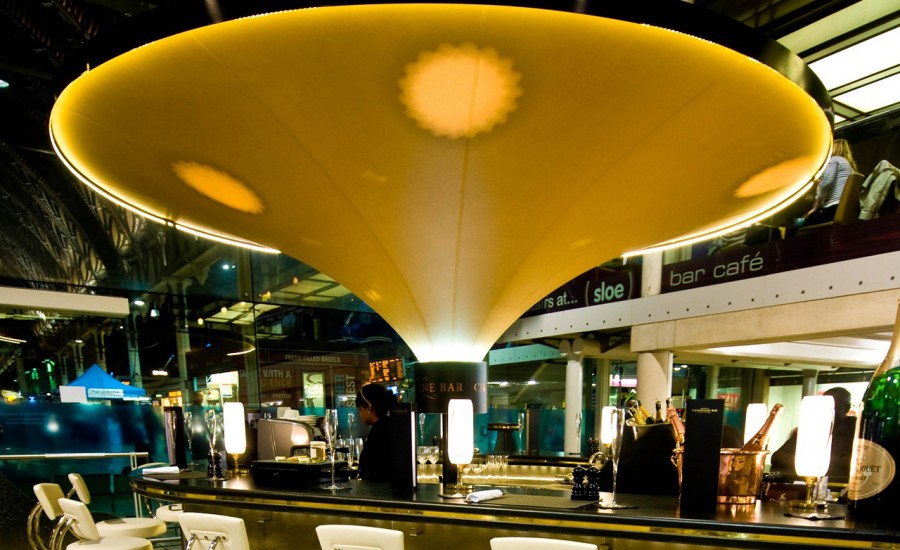
( Architen Landrell, no date)

For interiors there are three main mesh fabrics:

Cottons are most economical and are available in a wide range of colours. Due to their susceptibility to staining and shrinkage they are ideally suited for short term use or where a softer and more natural texture is required. PVC coated glass mesh is very durable and acts like a theatre gauze or sunscreen. Polyurethane coated glass cloth which has benefits of durability and similar appearance to cotton. (Architen Landrell, 2009)
( Architen Landrell, no date)

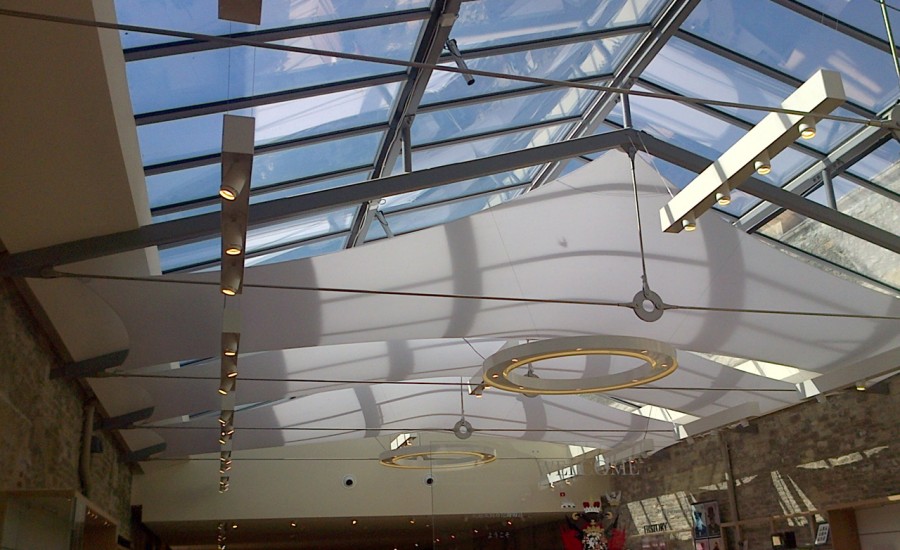
Translucent, curved forms offer solutions ideally suited to many of today’s architectural environments. Since external environmental factors have no influence over the design and engineering, the design possibilities are endless.
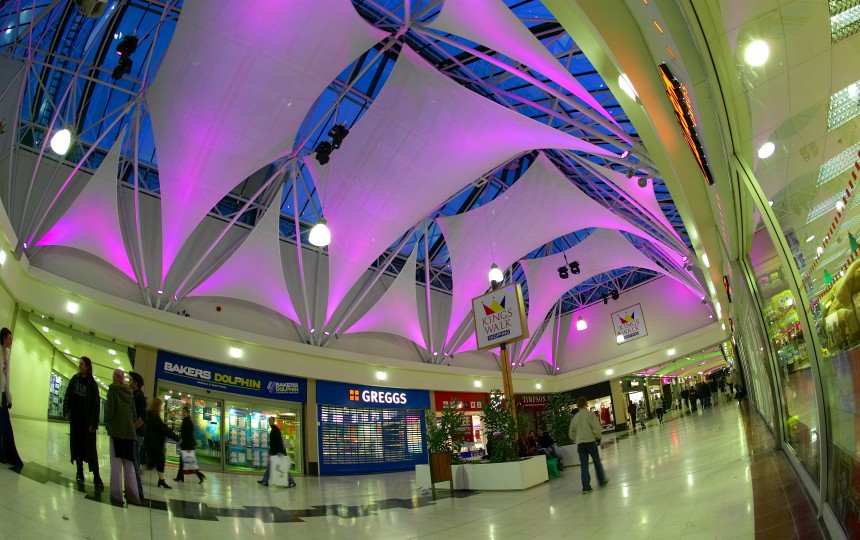
When fabric is introduced inside there are many benefits like controlling the light, reducing glare, absorbing the sound. They have long lifespan and easy maintenance.
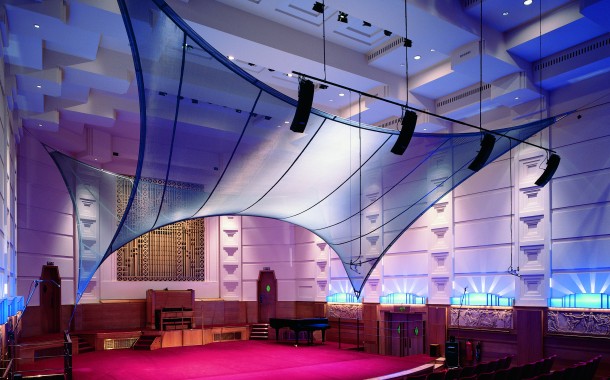
( Architen Landrell, no date)

Specialised acoustic absorption fabrics can improve the acoustic performance of a space. Also reduce noise and echo.
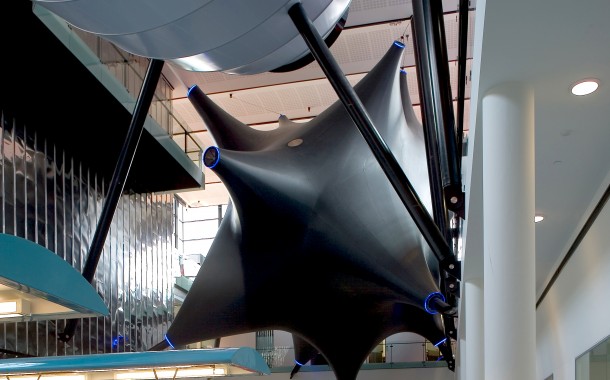
( Architen Landrell, no date)

Fabric structures are a powerful medium that can bring artistic expression. A complex works by architects, designers and artists can benefit from using it and focus attention and provide the wow effect. ( Architen Landrell, 2009)
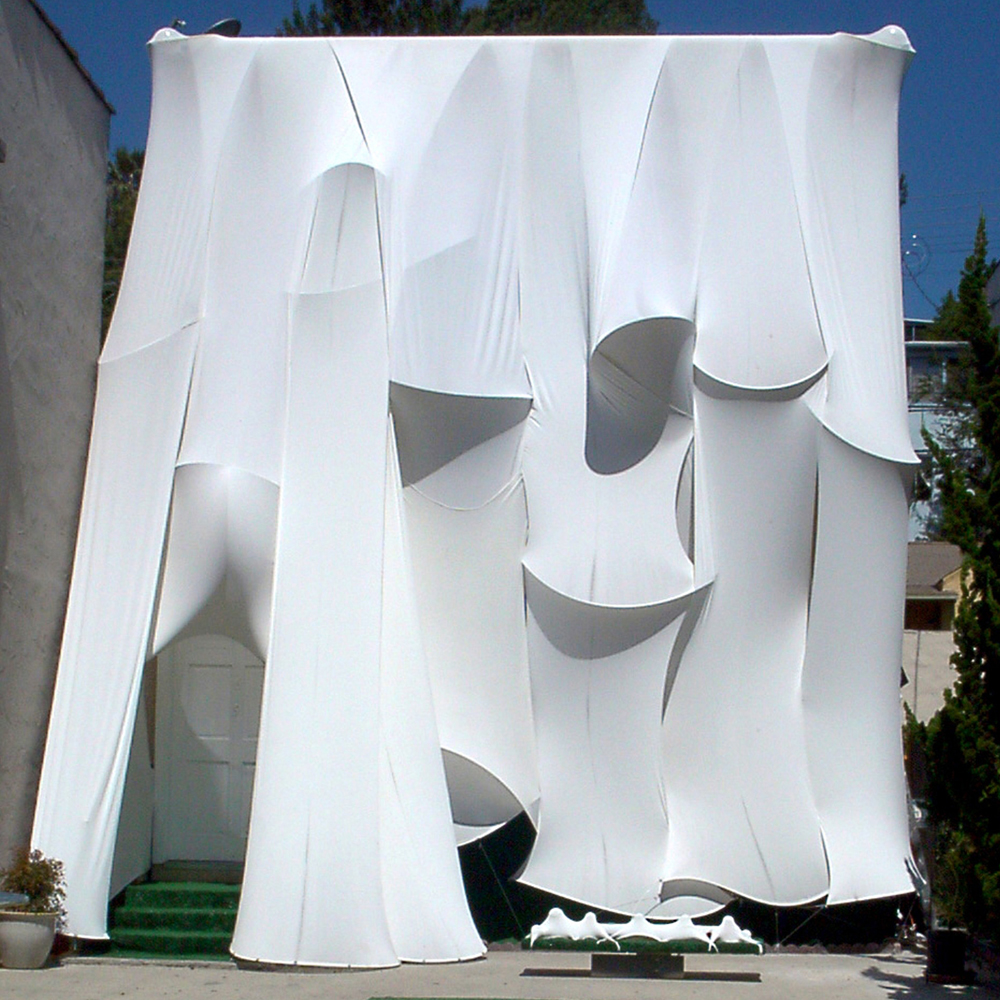
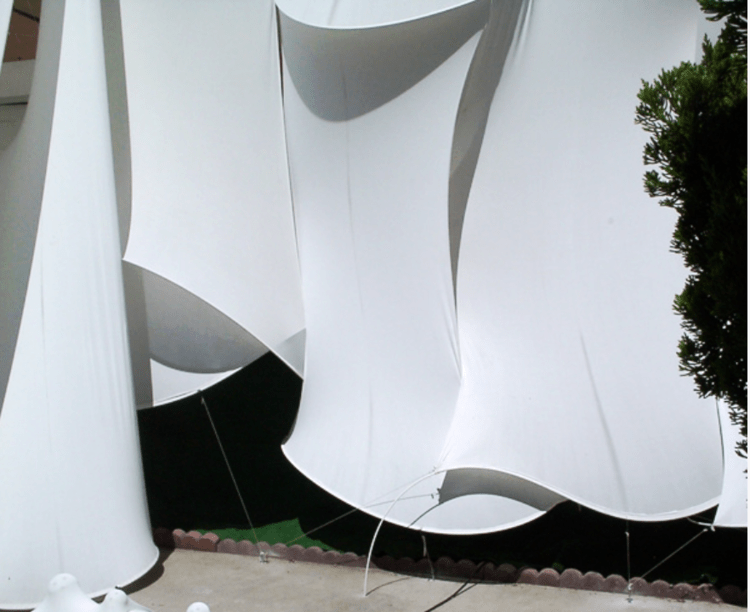
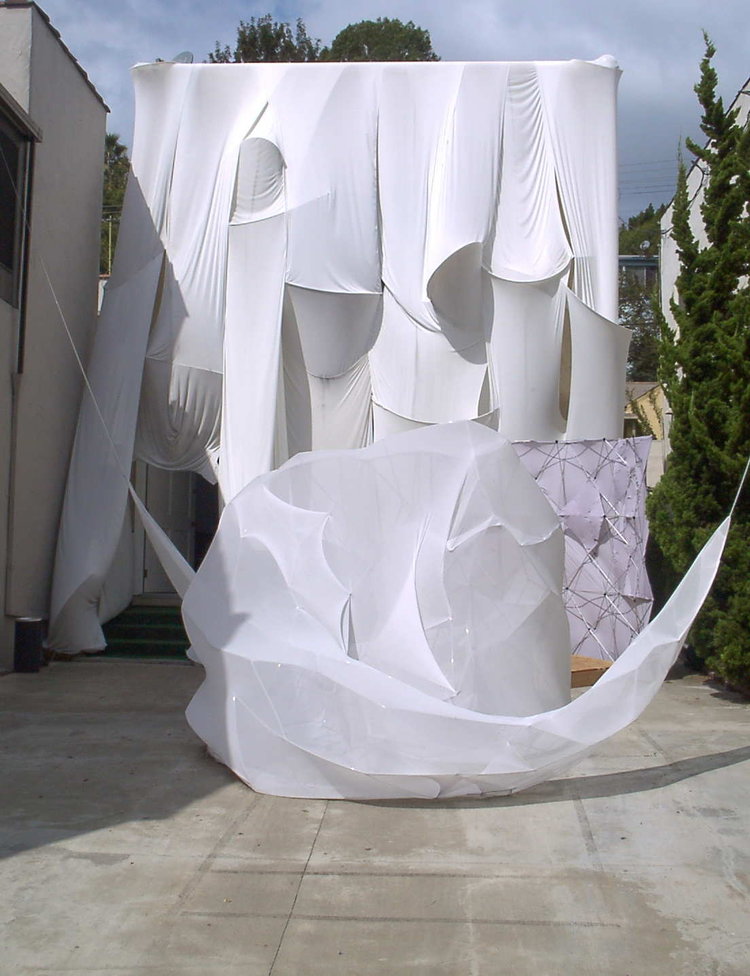
Liquid Façade by Jenna Didier


While looking for an appropriate view of my interior space and how my furniture would appear I found Jenna Didier’s Liquid Façade. I felt that her textile and shapes developed on the surface just by stretching fabric is organic, innovative and look relaxing.

The project was made in 2020 in Materials & Applications (M &A), Los Angeles CA. Materials used are stretch Lycra, fiberglass rods 35’/25’ /3’.

Inspired by the wrapped buildings of Christo and Jeanne-Claude and the stretch fabric interiors of Gisela Stromeyer, this facade presented a reverse unveiling of the new architecture and landscape research center, Materials & Applications, programmed at night by rear-projected video. ( Atelier DIDIER , 2002)

Jenna’ s statement is inspirational and gives the idea of responsibility art must follow. Jenna Didier says:

‘My strategy is to seek tangible forms to expose habits of use or environmental factors that are not immediately perceptible. I begin by researching underlying geological, ecological, and historical conditions at a site. I trace air currents, solar paths, weather patterns. I observe native flora, fauna, the flow of people, information, and resources. Discovering needs, I respond by stacking functions to solve as many concerns as possible. This has manifested as built machines in addition to founding public platforms for experimentation and debate.’ (Jenna Didier, 2002)

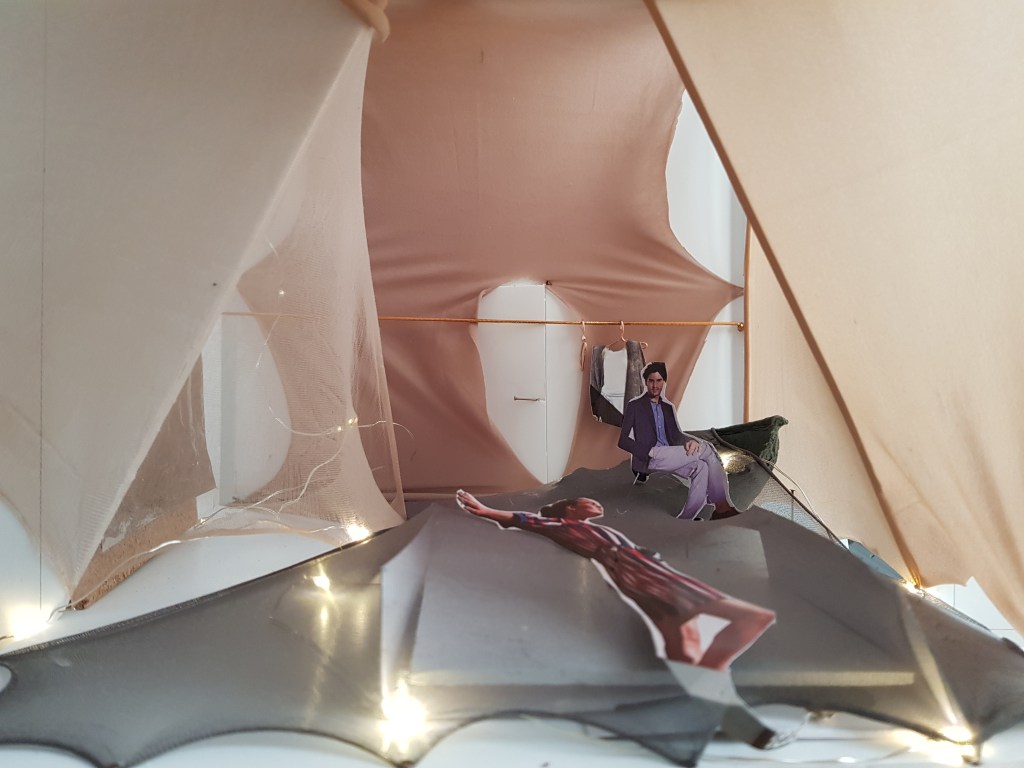
When I was thinking about my project I came to an absurd idea of making even the floor out of tensile fabric while covering structures to give just an idea of furniture. It was a really brave idea and creating the model was a pleasure but in real life only a few people would experiment to check in such hotel room. Artist like Didier give you space where you feel free to create.

Materials & Applications’ 25-by-40-foot outdoor exhibition space, just off of Los Angeles’s Silver Lake Boulevard, is nothing much fancier than a repurposed front garden. However, in its nearly 10 years of existence, nonprofit founder Jenna Didier, 41, and her co-director Oliver Hess, 38, have made that gravel yard a 24/7 laboratory for experimental architecture. Didier always knew that she wanted a place where innovative and emerging artists and designers could collaborate on new ideas for public space. “Architects seemed to understand its purpose intrinsically and began right away to propose ideas,” she says. (Zeiger, 2011)

Sophia Chang and Her Poché

( Kan , 2013)
( Kan , 2013)


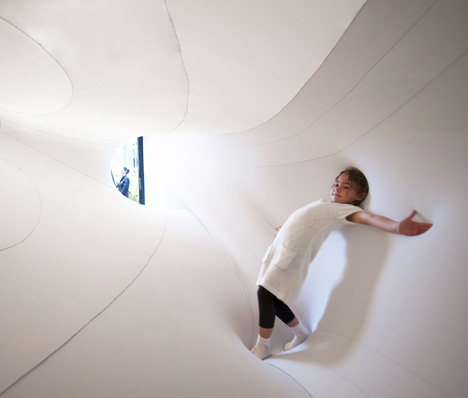
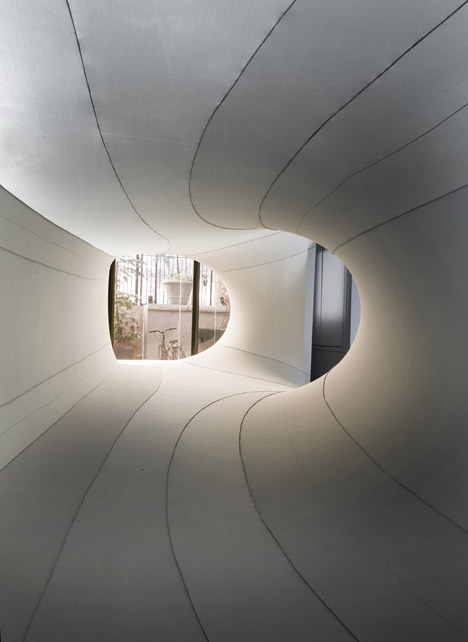
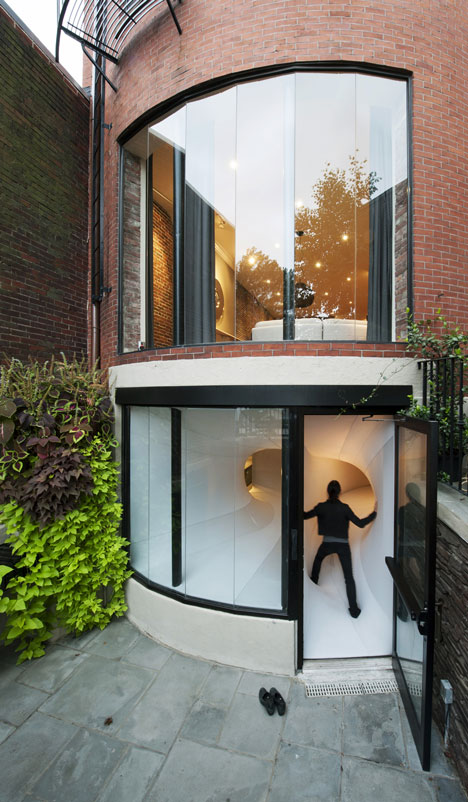
People could immerse themselves in a huge fabric cocoon at this interactive installation by architect and artist Sophia Chang

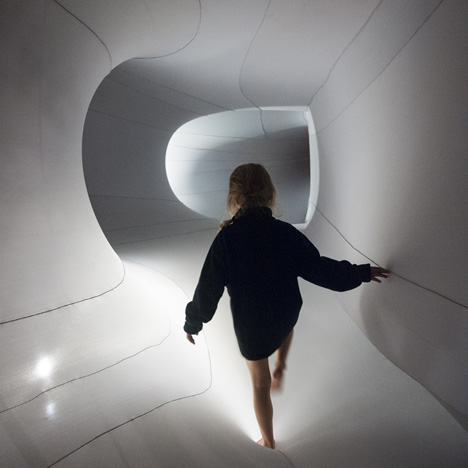
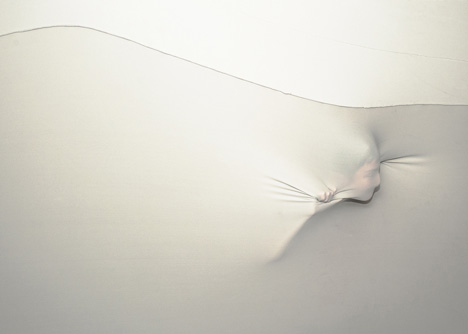
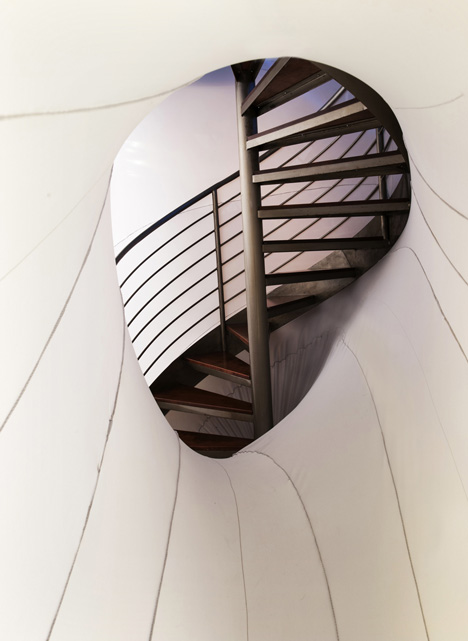
Sophia Chang stretched huge sheets of Lycra around frames to create the network of tunnels and enclosed spaces through the interior of the Invivia Gallery in Cambridge, Massachusetts “The softened geometries of this expansive fabric insertion frame both people and their context, while confounding the experience of interior and exterior, wall and room, hiding and revealing places to be found and explored,” said Chang.

( Kan , 2013) 
( Kan , 2013) 

The inside of the space was separated into two disconnected halves. Visitors could occupy either sides, meaning they could see the silhouettes of other people behind the dividing layer of fabric. According to the designer, the experience was intended to represent the feeling of being on the other side of a wall to something unknown – an area known as poché (Frearson, 2013).

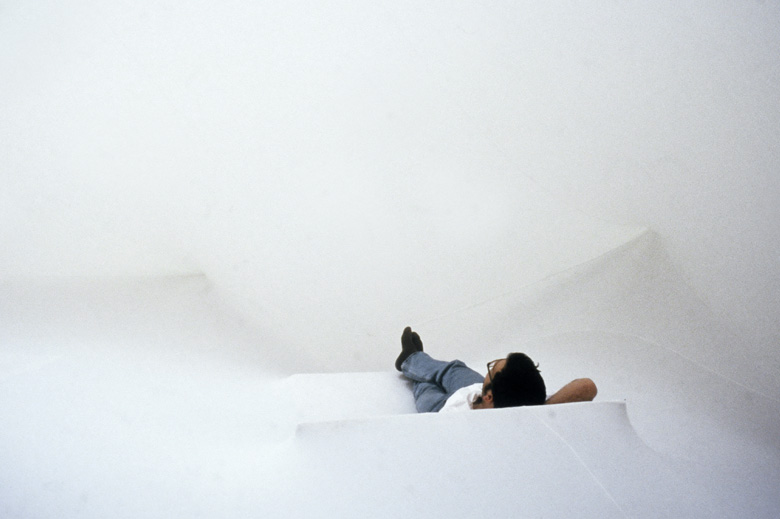
While searching for furniture in a tensile environment I found Sophia’s idea. I thought that every inhabitant of my hotel room project could find his own comforting place and use it as a sleeping space, sitting, relaxing and socializing area and even change it whenever he likes it.

( Kan , 2013) 

Sophia Chang describes her project Suspense (2013):

‘The installation is conceived as multiple layers of poché. The term commonly refers to the space within walls, here poché receives a more ambiguous reinterpretation: what could be understood as a wall or reminiscent space from one vantage point, becomes an inhabitable room from another. The complexity of the curved forms precludes immediate understanding of the total piece and allows for the visitor’s perception of the space to shift as they continue to discover new places to sit, contemplate, walk, and watch within the gallery.’

( Kan , 2013)


( Kan , 2013)

Neighbouring wall spaces are activated as people encounter each other through the fabric. The installation is an ‘open work’ (Umberto Eco) as it is not limited to a single reading or a predetermined range of readings but rather encourages multiple readings. With changes of light, occupation, and the flexing of the geometries, new realisations continuously become possible. (Chang , 2013) 

( Kan , 2013)

Héctor Zamora

Héctor Zamora is a Mexican artist that works in public spaces both indoors and outdoors. Zamora’s work questions the exhibition space by creating ephemeral site-specific artworks that involve viewer’s participation. In a hidden manner, his artistic practice reveals social, political and historical issues that are anchored to the sites chosen for his artwork. Both performative and plastic, Héctor Zamora’s body of works functions as a dialogue in which Art is an object as well as an event. (Albarran-Bourdais, no date)

(Sanjayan, 2013)

Héctor Zamora graduated from Universidad Autónoma Metropolitana-Xochimilco, Mexico City in graphic design in 1998. Now lives and works in Lisbon.(Albarran-Bourdais, no date)

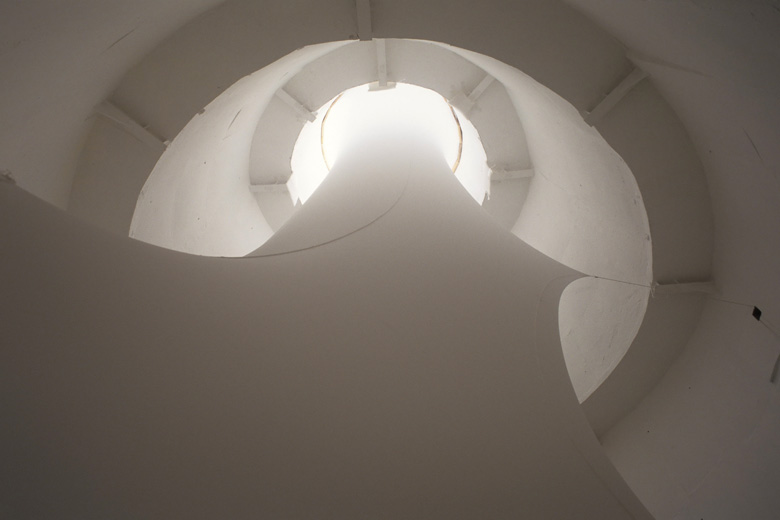
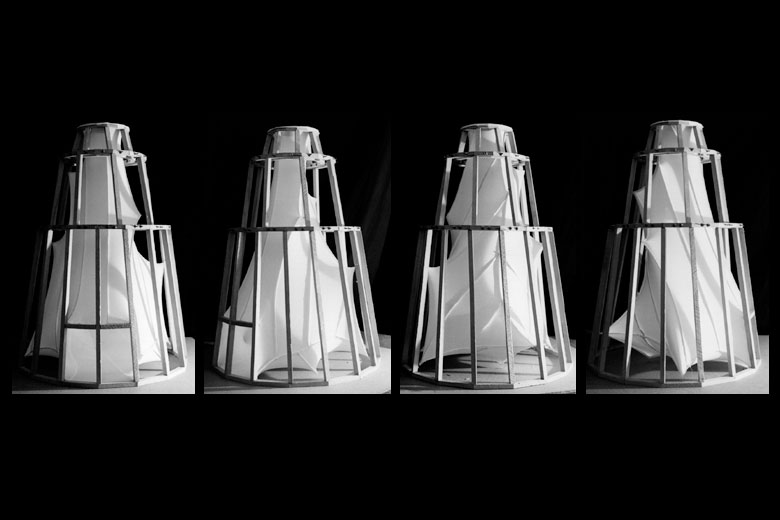
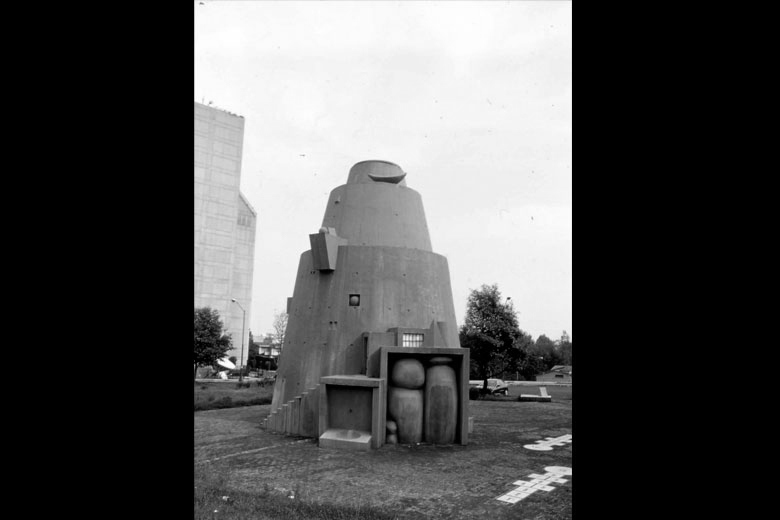
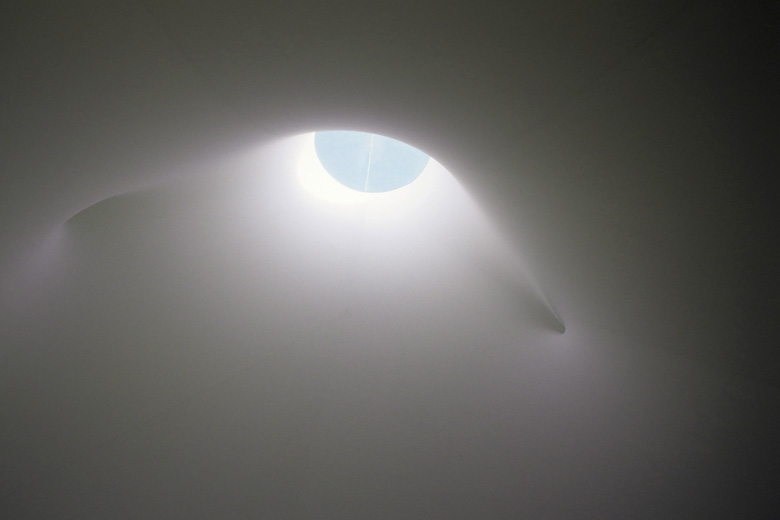
While working on creating a tensile space inspired by Frei Otto’s lightweight sructures I found Zamora’s project a=360r/R. The unbelievable interior takes place in a tower and the artist stretches white fabric from the ceiling. The inner space he creates provokes the senses and perception of self-weight and balance. The natural light coming from above creates almost dreamy reality.  

The dimensions of the space he made in 2000 are 150m², 8m (base diameter); 2m (top diameter). The technique is  lycra membrane and nylon thread and place is Art in situ – La torre de los vientos, Mexico City, Mexico.

Intervention that fully occupies the interior of the tower, transforming this space in an organic environment, the light shed on the plastic membrane that covers this interior provokes a transfiguration that ends up dissolving the surroundings and the limits of this space (Zamora , 2000).

(Zamora, 2000)

(Zamora , 2000)

(Zamora , 2000)

(Zamora , 2000)

(Zamora , 2000)

Christo, adieu!

Rest in peace, dear Christo!

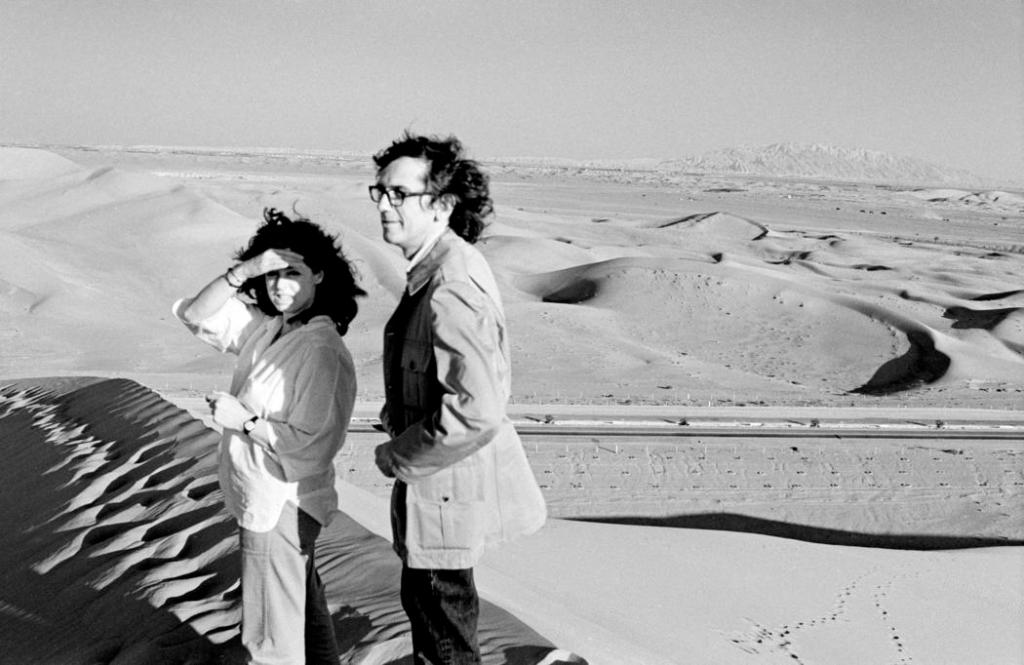
One of the greatest artists and visionaries from my native Bulgaria went on his eternal journey yesterday (31 May 2020). Finally he is united with his love Jeanne – Claude. I will always be inspired by his genius soul and artistic touch to our magnificent nature and his visions will never be forgotten.

(Volz , 1979)

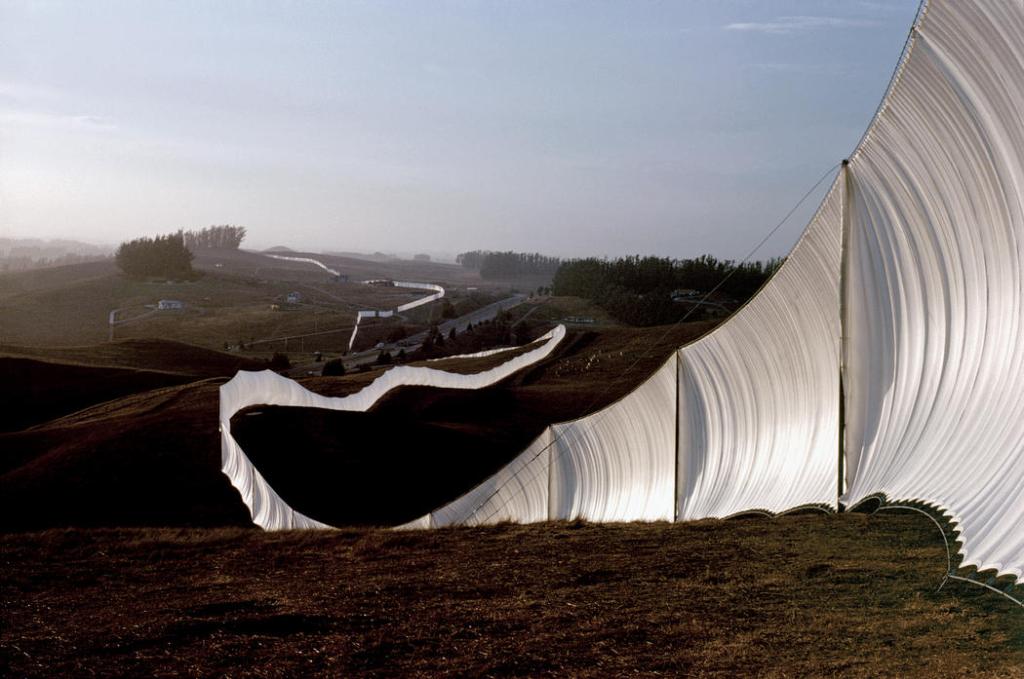
One of the countless projects Christo and Jeanne – Claude made is the Running Fence. I was impressed especially when searching for fabric, lightweight structures for my Frei Otto’s room project.

Description: Running Fence, Sonoma and Marin Counties, California, 1972-76
(Jeanne-Claude, 1976)

Running Fence:  5.5 meters high, 39.4 kilometers long, extending east-west near Freeway 101, north of San Francisco, on the private properties of 59 ranchers, following the rolling hills and dropping down to the Pacific Ocean at Bodega Bay. The Running Fence was completed on September 10, 1976.

Running Fence was made of 200,000 square meters of heavy woven white nylon fabric, hung from a steel cable strung between 2,050 steel poles (each 6.4 meters long, 8.9 cm in diameter) embedded 91 centimeters into the ground, using no concrete and braced laterally with guy wires (145 kilometers of steel cable) and 14,000 earth anchors. The top and bottom edges of the 2,050 fabric panels were secured to the upper and lower cables by 350,000 hooks.

All expenses for the temporary work of art were paid by Christo and Jeanne-Claude through the sale of studies, preparatory drawings and collages, scale models and original lithographs. The artists do not accept sponsorship of any kind.

All parts of Running Fence’s structure were designed for complete removal and no visible evidence of Running Fence remains on the hills of Sonoma and Marin Counties.

(Christo, 1976)

There are no better words to express my deep respect for the artist of such scale than an architect and friend of mine, Pavel Yanchev (2020) said:

‘Against prevailing narratives that describe Christo solely as a freedom fighter and challenging the constraints of administrations, I think that he taught us all how we should approach a project. Namely, have to confront reality with profound study, with negotiation, with patience and with respect towards the complexities of human and natural environment.’

GaiaMotherTree

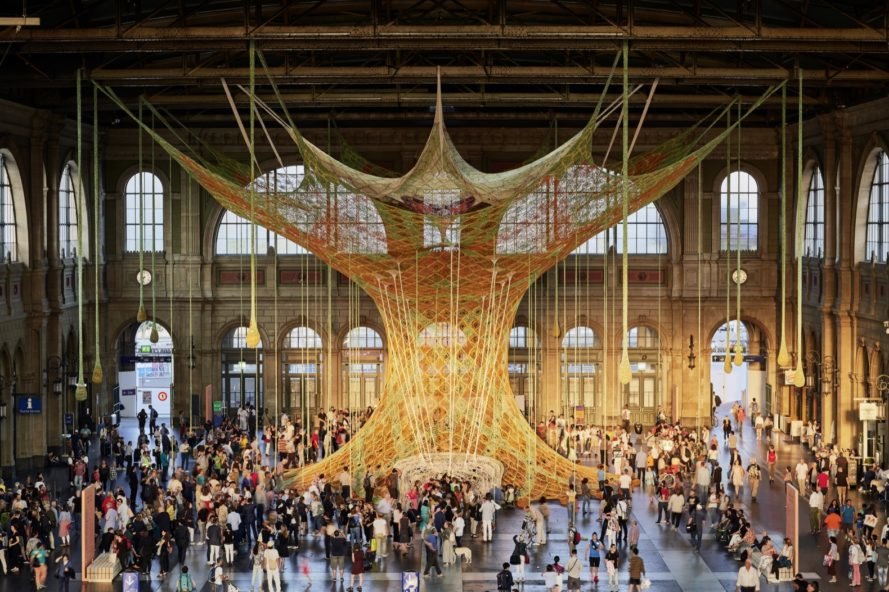
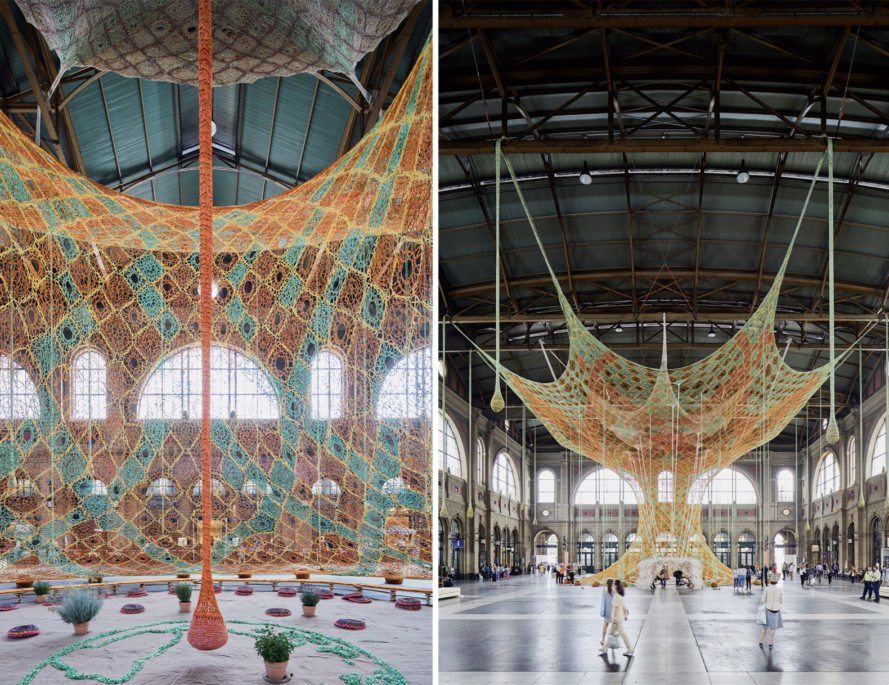
An explosion of color has taken over the central train station in Zurich, Switzerland. In collaboration with the Fondation Beyeler, Brazilian contemporary artist Ernesto Neto has installed a stunning and monumental work of art that rises 65 feet to the ceiling height of the Zurich Main Station, the busiest train station in Switzerland. Dubbed the GaiaMotherTree, this sculptural and interactive tree-like artwork resembles a living organism. ( Wang, 2018)

Description: https://inhabitat.com/wp-content/blogs.dir/1/files/2018/07/GaiaMotherTree-by-Ernesto-Neto-4-889x592.jpg

( Niedermann, 2018)

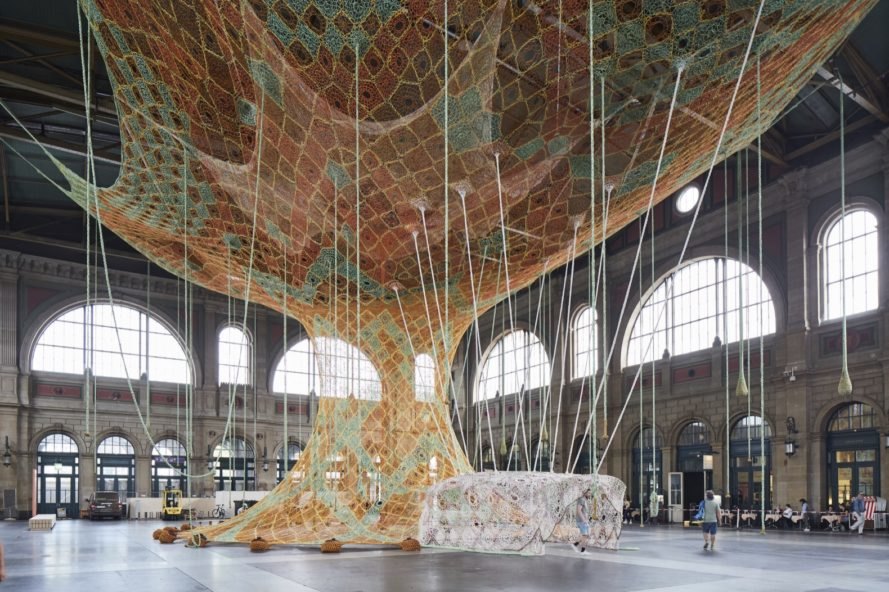
Crafted from colorful strips of cotton knotted together with finger-crocheting techniques, Ernesto Neto’s GaiaMotherTree is made all the more eye-catching due to its backdrop—the Neorenaissance architecture of the Zurich Main Station, built in 1871. The sweeping organic structure was shaped and stabilized using drop-shaped counterweights filled with ground spices including turmeric, cloves, cumin and black pepper. The central counterweight that hangs above a giant outline of the world in the heart of the GaiaMotherTree is filled with 30 kilograms of plant seeds. No nails were used to support the installation; in addition to the counterweights, 840 kilograms of earth was used to secure it.

( Wang, 2018)

Description: https://inhabitat.com/wp-content/blogs.dir/1/files/2018/07/GaiaMotherTree-by-Ernesto-Neto-3-889x592.jpg

( Niedermann, 2018)

Description: https://inhabitat.com/wp-content/blogs.dir/1/files/2018/07/GaiaMotherTree-by-Ernesto-Neto-2-889x685.jpg

( Niedermann , 2018)

When I discovered Ernesto Neto’s GaiaMotherTree huge artwork I was looking for a more organic shape for my space. I found his deep connection with nature so inspiring and pure and I want to implement such vision in my future designs.

Description: https://inhabitat.com/wp-content/blogs.dir/1/files/2018/07/GaiaMotherTree-by-Ernesto-Neto-6-889x593.jpg

( Fabaek , 2018)

“For me, mind and body are one thing, always together,” the artist has said. “I believe in the sensual body, and it is through the movement of such body-minds that we connect the things in this world, in life—the way we touch, the way we feel, the way we think and the way we deal.” (Neto, 1999)

This impressive installation stays out as a huge reminder how important Mother Earth is especially now in the times of viruses, social distancing and in my opinion is important for art to be responsible for saving the planet and our souls.  

my first blog

My name is Alexandrina. Doing my Interior Architecture project for semester two I did a big research concerning my design. My inspiration is Frei Otto and his unique lightweight architecture, tensile constructions and teachings. I had to create a hotel room not only influenced by Otto but done by him. So I had to enter his mind and imagine I am his thoughts and visions, and create this space. It was a challenging and long lasting process. My personal journey begins with plans ‘in the box’ to experiments and layouts way out of my comfort zone. During this deep and hard development many amazing ideas and artists’ interpretations appeared. Here I want to show my appreciation to all the talented, crafty and hard working designers, architects and artists I found while walking in the genius shoes of my architect and muse, the great Frei Otto.

Ernesto Neto

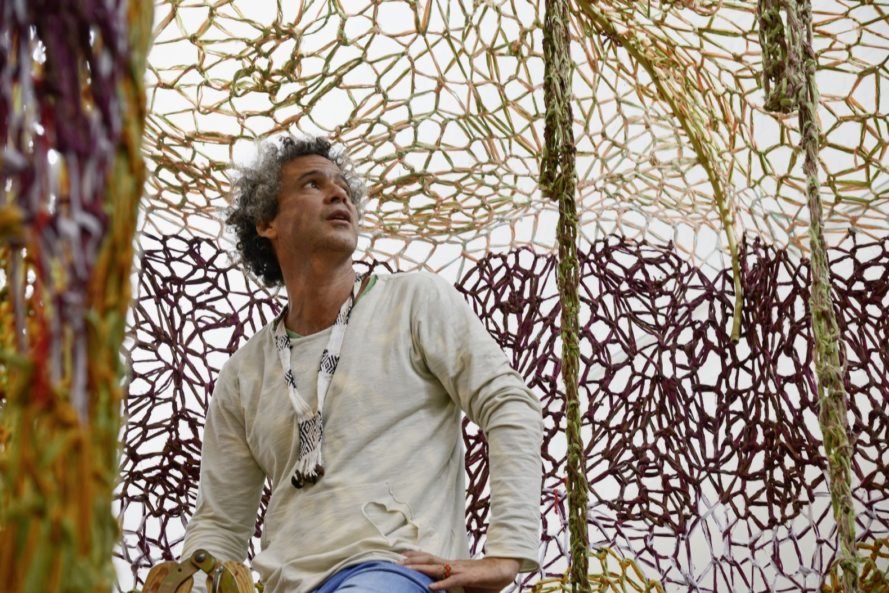
Ernesto Neto is a Brazilian Conceptual artist whose installations offer a chance for the viewer to touch, see, smell, and feel his artworks for a truly sensory experience (Neto , 1999).

(Neto, 1999)

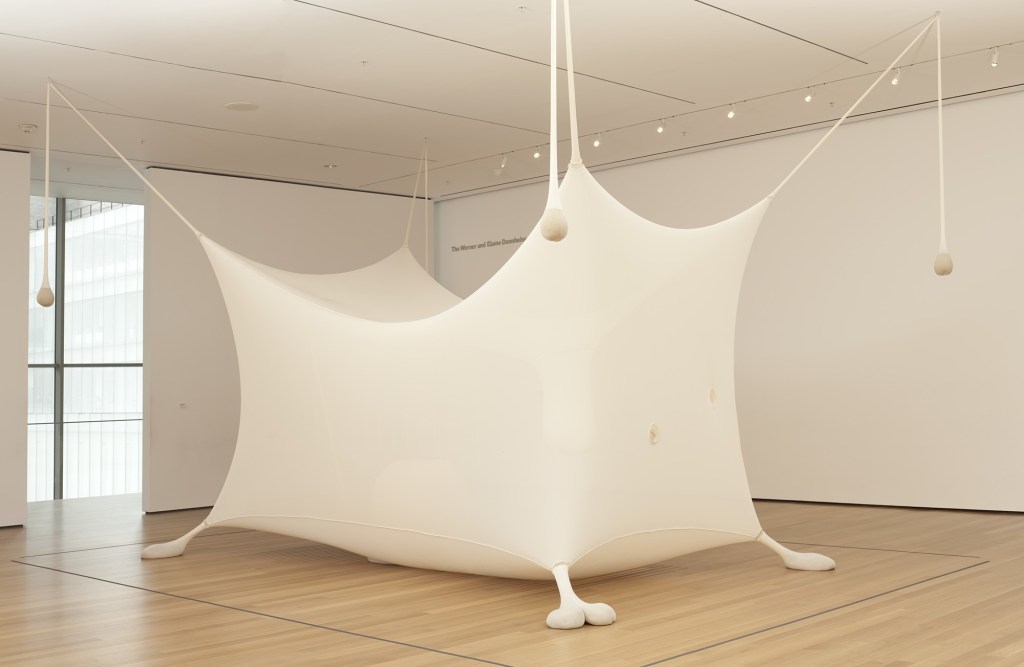
Since the late 1990s, Brazilian artist Ernesto Neto has created interactive, enveloping sculptural environments using translucent stretch fabric. Navedenga is one of the earliest works in this ongoing series. Its soft, sensuous surface, curving, taut contours, and rounded appendages evoke the human body, and its material is pliant and responsive to touch, like living skin. This form and the title of the work, a Portuguese neologism created by the artist, suggest both a fantastical spacecraft (nave means “ship”) and a protective womb. Aromatic cloves embedded in the structure add an olfactory dimension to the visual and tactile experience of the work. Viewers are invited to enter the works hollow chamber two at a time (Neto, 1998).

I found this piece of art matching my interior ideas when searching for more organic shape for my room, part of a project inspired by Frei Otto’s tensile structures.

Description: Ernesto Neto. Navedenga. 1998 | MoMA

 (Neto, 1998)

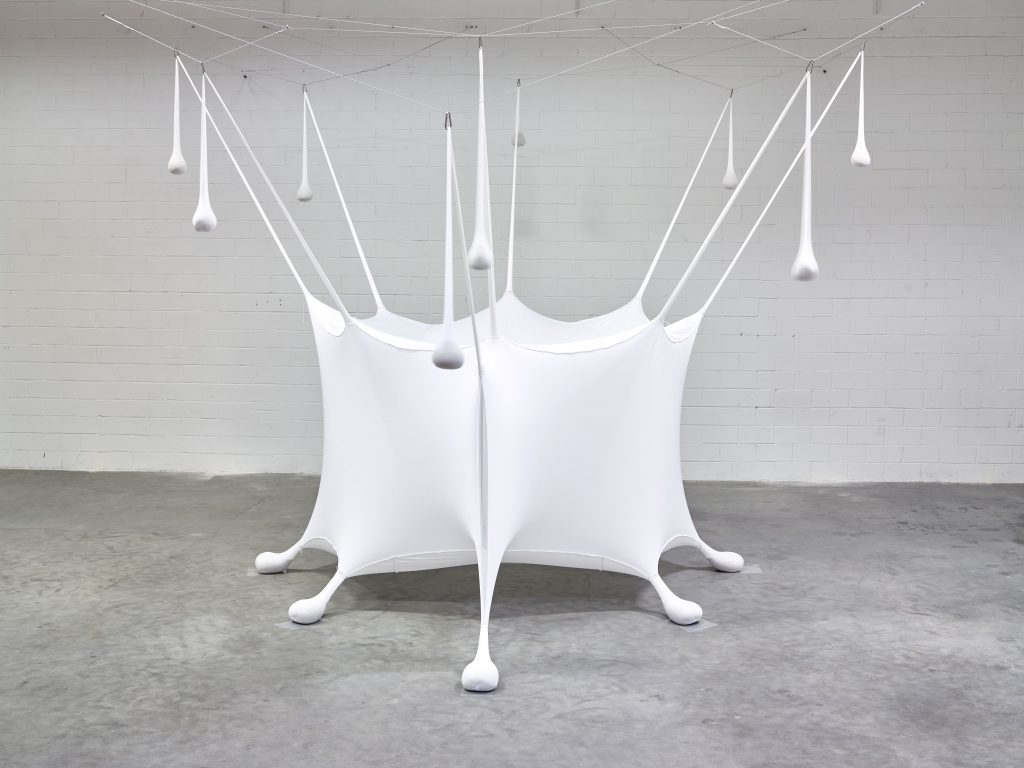
White Bubble (2013/17) is based on one of the elements of Hyper Event Horizon, included in Neto’s 2014 exhibition at the Guggenheim Museum Bilbao. The artist reshaped and adapted it to the space created by Frank Gehry’s iconic architecture. The piece explores the limits of the human body, transforming the approach to art from visual into a multi-sensory moment while drawing the viewer’s attention to the purest sensations as perceived from the surfaces of the universe constructed by Neto. The artist intends for visitors to merge with the piece, encouraging them to experience the encounter as something that goes beyond and transforms them. Walking through it, the viewer feels how the translucent structure changes with their weight and the trace they leave behind is transformed by the marks of the human bodies coming later.

White Bubble constitutes a valuable exploration and reflection on the limits of the human body. In Neto’s exhibitions, the museum is transformed into a space for poetry: “We are constantly receiving information, but I want this to be a place where we stop thinking.”

(Neto, 2013)

 (Neto, 2013)  

Searching for an experiment with tensile fabrics I found that Neto’s bubble resembles a lot my idea of the floor in my Frei Otto’s inspired hotel room project which has to provoke people’s sensation of weight and balance.

Gisela Stromeyer

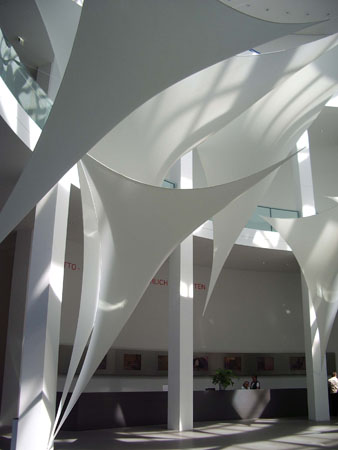
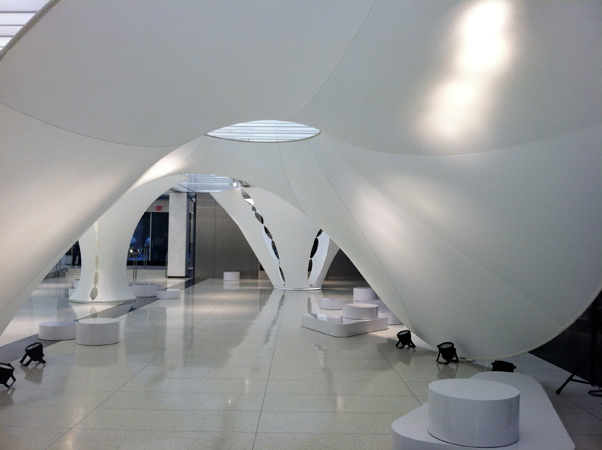
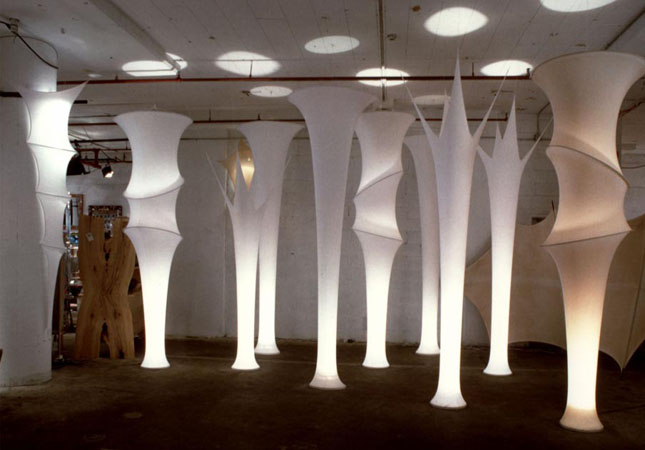
The New York based architect Gisela Stromeyer comes from a family of fourth generation German tentmakers. Her father Peter Stromeyer, in partnership with the renowned architect Frei Otto, pioneered exciting innovations in the history of tensile structures. Gisela uses fabric not to create shelter, but to visually and texturally enhance existing spaces (stromeyerdesign.com, 2011).

Description: http://www.stromeyerdesign.com/source/img/02.jpg
(Stromeyer , 2011 )
Description: http://www.stromeyerdesign.com/source/img/65.jpg
(Stromeyer , 2011 )

Gisela Stromeyer is an artist which I found while searching for an inspiration on my interior architecture project of a hotel room influenced by Frei Otto, German architect, construction engineer and university teacher, recognized for his lightweight and tensile structures. I found her artwork helpful for creating my inside design layout. Her practical way of defining space taught me a precious lesson.

Each of Stromeyer’s installations begins with a meticulous examination of the room’s frameworks. She develops sketch drawings into finished plans and scale models, then cuts and sews the fabric herself (stromeyerdesign.com, 2011).

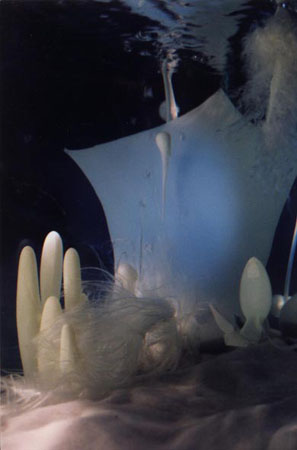
She creates fabric sculptures, floor lamps and underwater sculptures.

While she is aware of the logic behind conventional rectilinear spaces, Stromeyer is drawn to building with fabric because it allows her to create sensuous, moving forms. When accented by light, the graceful symmetries of the forms come to life (stromeyerdesign.com, 2011).

Description: http://www.stromeyerdesign.com/source/img/products/01.jpg
(Moran, 2011)

She was honored with five awards for outstanding achievement in design and fabrication of the IFAI and best of furniture award by iD magazine with her Floor lamps, now in permanent collection at the Denver Art Museum. (Stromeyer, 2011)

Description: http://www.stromeyerdesign.com/source/img/underwater/1.jpg
 ( Stromeyer, 2011)

Description: Gisela Stromeyer
 ( Stromeyer, 2011)

‘My architecture training taught me how to perceive and define spaces and to turn my vision into a built form. It was my experience as a dancer, however, that allows me to sense space as movement. Spaces are fluid.”Architecture can be so linear and rigid. It’s usually not shaped like the human body, so it rarely reflects our natural longings for softness, flexibility and flow. We long for spaces that not only contain us, but allow our spirits to soar as well.'( Stromeyer, 2011)